Thursday, March 17, 2016

Horses, farming and quilts


I had a short trip back home last week, more to take an art quilting class than to visit.  The trip ended up being an interesting illustration of the six degrees of separation theory, and tied together some significant interests in my life.
 
The class was held at Lake Farm Park, an educational working farm, but forty years ago, the land was Locust Farms, home to a nationally renowned Arabian horse breeding and training facility.  In the mid to late 1970s, the farm was undergoing some expansion as their herd of horses grew.  Many of their horses were imported from Poland, and the farm brought back not only the equines, but European methods of raising them.  Mares and foals in Europe were typically housed in large, open barns (without stalls), in small herds.  My father helped build those “Polish barns” at Locust Farms.  He was a fulltime firefighter in the city of Cleveland, and his battalion chief was the foreman of Locust Farms.  Since they worked a 24 hour-on, 48 hour-off shift, many firefighters took additional jobs.  The chief/foreman made a habit of hiring firefighters for building projects on the farm. 
A view of the Polish barns in the distance
 
There were a couple of occasions when my parents took my toddler self out to Locust Farms, and I am sure this was how my future horse craziness started.  I only have vague memories of the farm, just brief images in my mind… I do remember seeing the farm’s premier stallion, Gwalior.  He has his own huge 40’x20’ wood paneled stall, monitored 24/7 by overhead cameras.  These were not your average pleasure horses, the Arabian horse market in the 1970s and early 1980s was not far behind the Thoroughbred industry in terms of value.  Several influential people in the entertainment industry got into Arabian horses, there’s no telling which of them might have visited Locust Farms. 
 
The Gwalior memorial

My class ran all day, so I did not get to wander around the Farm Park to see how they are using the Polish barns now.  I would like to go back there to visit, as I have a strong interest in sustainable agriculture.  I’d like to see what the park has to offer in that regard.  Next year, I should have a quilt entered in their annual show, so that wish will likely be fulfilled.  I learned a few new design ideas from the class, more ways to use scraps, and ways to alter images for transformation into fabric creations.

Thursday, March 10, 2016

Springing into New Projects

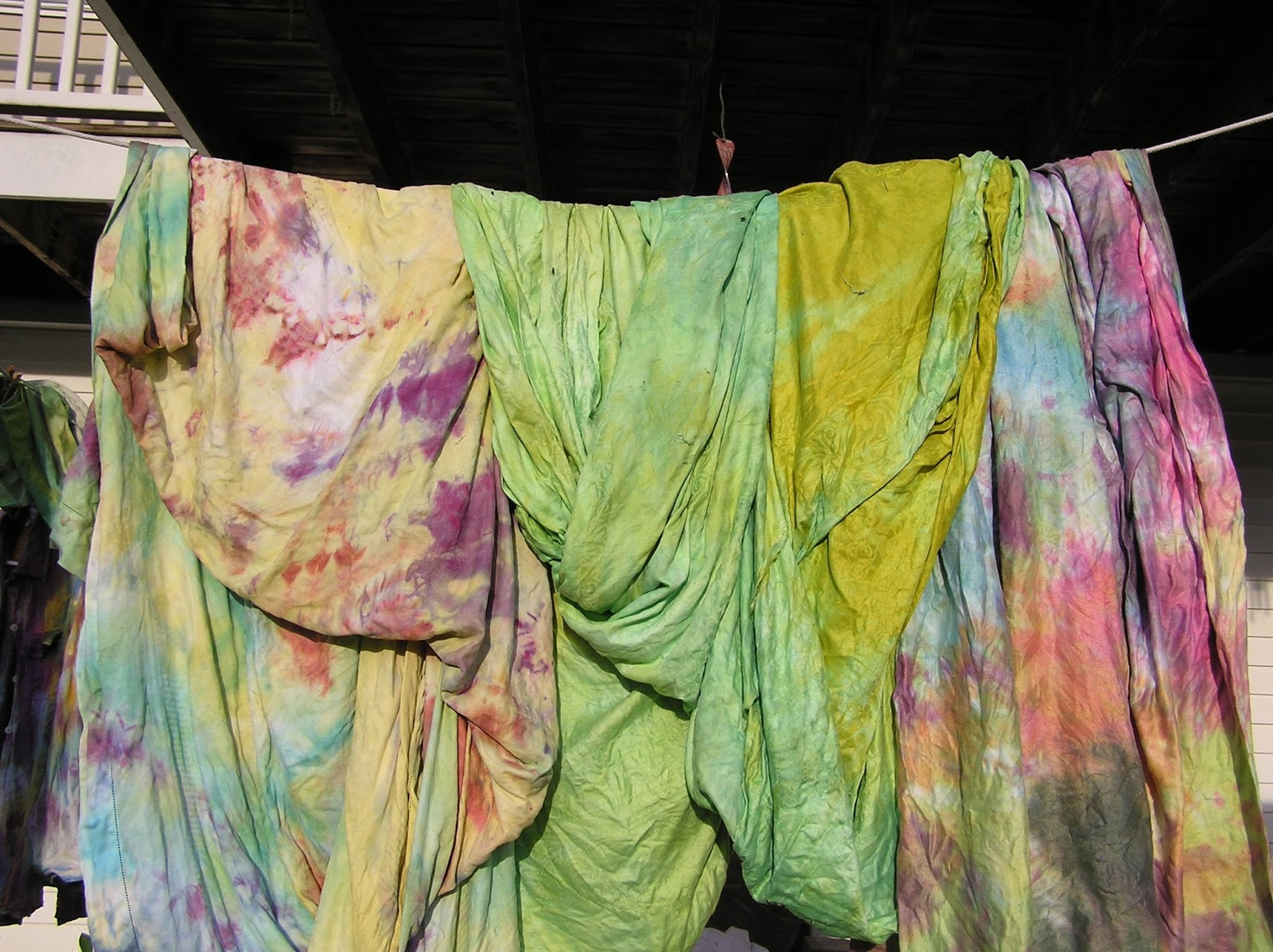
It has been unseasonably warm this week in my neck of the woods, which has me looking forward to a fresh season of fabric dyeing and planting for natural dyes.  I just got my new Dharma catalog too, I have to take inventory on my dyes and supplies and run up the credit card again!


I really hope that my elderberries start growing this year, I need to find space for dahlias, and I want to plant some rows of wildflowers so I may easily harvest them for dyes.  I have gathered seeds from ironweed and Joe Pye weed from my meadow.  Soon, the horsetails will be sprouting in the ditch along the road.  I love the pale green I got from them last year.  Speaking of flowers, I am working on a floral wall hanging that I plan to offer as a creative workshop and "pattern" that will be available on my Etsy shop soon.  It will probably be a month yet before it is finished and up for purchase.

 I always seem to dream bigger dreams than I have time, energy and ability to achieve.  At least I have grand dreams, I encounter too many people who don't seem to have dreams.  What are your dreams for this spring?

Monday, March 7, 2016

First Outdoor Art Fair

I know that this is a bit far in advance, but I am excited to announce that I have a space at Art on the Hill on July 9, 2016 in Mantua, Ohio.  This will be my first venture in selling finished art at an event.  Now I need to get a pop-up tent, make a sign, and figure out how to display my wares.  July will be here before I know it! 


I'm working on a whole lot of my fabric boxes for this.  I will also have some 2-D wall hangings and I will take a small selection of hand-dyed fabric.


I'm sure the next few months will be full of adventures in the prep for this event, so check back to see what sort of trouble I've gotten into!


Thursday, February 25, 2016

Embroidery Stitches


Whenever I get together with other art quilters, talk often turns to techniques and where one gets their ideas or where they learned a certain way of doing something.  I have been wanting to talk about textile art resources for a while now, so here is the first of a periodic series on what I have been using to learn.  NOTE:  I do not receive any compensation for mentioning any book, product or individual on this blog!
 

I have been working on a (somewhat) weekly project, making a fabric postcard sampler of hand embroidery stitches.  The amazing array of textures created by hand stitching in crazy quilts and ribbon embroidery was probably the biggest factor in my finally learning to sew and jumping into art quilting.  Over the past few years, I have amassed a stack of books on fancy stitches.  I keep coming back to four of them more than any of the others.

For my weekly stitch samples, I have slowly been working my way through the Embroidery and Crazy Quilt Stitch Tool by Judith Baker Montano (C&T Publishing, 2008).  You really can’t go wrong with any of her books, but I feel that this is the best of her stitching books if you want to learn stitches.  No images of her stunning stitch work here, just clear instructions on creating some 180 thread and ribbon stitches, very easy from which to teach oneself.  My little project consists of making one postcard per stitch, and I use as many different threads as I can, resulting in my own visual stitch journal/”dictionary.”  It is a great reference for choosing a thread and stitch for a certain look that I want to achieve, and sometimes it is a reminder that some stitches don’t look so great in some threads.  If something doesn’t work out, I leave it as a reminder. 

Another stitch guide that I refer to frequently is Creative Stitching by Sue Spargo (self-published, 2012).  This source covers only about 50 stitches, and there is some duplication with the Montano book, but there are enough other stitches not in Montano to make it worthwhile.  Spargo also gives helpful recommendations on what needles to use for each stitch.  

Once I’ve mastered the basics of some new stitches, I look to Montano’s Free-Form Embroidery (C&T Publishing, 2012) and The Magic of Crazy Quilting by J. Marsh Michler (Krause Publications, 2003) for endless inspiration on combining and altering stitches by stretching and overlapping. 

As I mentioned, I have other books on embroidery stitching, and there are more than that out there, these are simply then ones I use most often. 

Tuesday, February 16, 2016

Art quilt labels, the end of the series


Labels, part three

One more go around with the labels, then I will move on to something else.  One of the opinions that arose in the SAQA list discussion was that art quilters (textile artists) should just follow the status quo of the established fine arts world, and just put your name and title on the piece, nothing more.  The more I think about that, the more I dislike it.  If I were buying a painting, new or old, I would like to know more about it than a name and title.  As an art quilter, this is one area where I don’t want to emulate the greater art world.   

I also feel that informative labels might help in our crusade to gain more acceptance in the greater art community.  What a great way to educate potential buyers who are unfamiliar with art quilting.  This is yet another way to be good ambassadors for our chosen form of expression.  When I see an art label with some background about the individual piece, it tells me that the artist really cares about it, and wants other people to care too.  Not that lack of a label means the artist doesn’t care, but I like it when I see someone go the extra distance. 

As I asked in my last post, what sort of legacy will you leave as an artist?  If you don’t want art collectors (or museums, galleries) to know about your work, why are you making things?  The information on your website is only going to last as long as you keep paying for the site hosting.  In what other venues do you have your biographical information as an artist?  I used to work in an art museum in a major Midwestern city that has an extensive archive on artists that either were born in that city, were educated there, or lived for more than one year there.  Someday, I should find out if similar artist archives exist elsewhere.

Thursday, February 11, 2016

Art Labels, Part Two, the Sequel, the Next Day


Aside from the five art quilts on canvas that I discussed in my last post, I own only three other pieces from other art quilters.  None of the three pieces are what I would consider a “quilt.”  All are mixed media, one is a collage on mat board (I think), the other two are creations on stretched canvas.  Collage #1 has a neat computer printed paper label affixed to the back with the title, artist, date, artist’s address and phone number.  Collage #2 has a computer printed label with the title, media, artist, and date.  Collage #3 simply has the artist, city and state, artist’s email and title scrawled on the back in pencil. 

Does the information provided on a label convey anything of the artist’s thoughts about their work? 
Does the manner in which the information is placed on the art work say anything? 

I know I have a miniscule population sample to go on, but just the three pieces raise some interesting issues.  Not one of the three has a copyright insignia (you know, a letter “c” in a circle).  I don’t want to get deep into copyright here, which is another can o’ worms.  I will say this much; at a talk given a few years ago by a copyright lawyer, I learned that at the very least, an artist should put their name, date and the copyright symbol on their finished work to protect themselves (even if the is not formally registered).  Are artists giving up on copyright?  I know I need to learn how to watermark my images.  (No, it is not OK to repost images from this blog elsewhere, even if I haven’t done what I should do to them.) 

I was stunned over the piece that had the address and phone number on the back.  I know we all want to generate more sales, but there are now far better ways to have unknown individuals contact you.  Be careful, be safe, think about what information you are putting out there.  Yet at the same time, we want to be traceable, not just for sales here and now, but farther down the road.  Do you want future generations to appreciate your art work and know a little bit about you?  What legacy do you want to leave?  

I’m not going to divulge my answers to the above questions here, but I will put them into practice with my art work.  As someone with a bachelor’s degree in art history, I am intrigued by the future study of art work labels, not by me though.  This is a lot to ponder, and I have more than enough to think about.  Right now, I am trying to think spring, and I need to get back to a design of flowers that I hope to offer as a pattern soon.

Thursday, February 4, 2016

Art Quilt Labels, Part One


Recently, there was a hot discussion on the SAQA group about artist’s statements and labels on art quilts.  I will be posting an expanded version of my two cents worth in that discussion over the next couple of weeks.  Here is part one. 

I would love to see labels taken more seriously.  A few other art quilters I have known put a lot into their quilt labels, printing them out (sometimes a full 8.5 x 11”) on fabric inkjet sheets.  These labels included the artist’s name, title of work, materials, care instructions, and the inspiration for the piece.  While I have doubts about the long term archival stability of fusibles and inkjet fabric printing, I love the idea of having all the pertinent information about an individual work permanently attached to it.  Paperwork gets lost or tossed too easily.  Indeed, fabric itself is not a material made for great longevity, but a properly cared for textile object should easily last to be passed down through several generations. 

I attend a lot of estate auctions, flea markets and antiques markets.  Once in a while, I find “orphan” artwork that may be signed, but is otherwise untraceable.  I also saw a fair share of mystery artwork while working in an art museum library.  Much of the art work was quality, yet we could not find any information on the artist.  If you are a textile artist, what are the chances of pieces that you have sold surviving the dispersal of the buyer’s estate?  I would think that with a permanent label with some story, etc., would give the executors an indication that this item might be important.  At least give them pause and save it from the trash.  Maybe, maybe not.  Without a name or only a name and nothing more, a piece of art work may not be given much thought.   
 

I found the five pieces above at a flea market last autumn.  They are each six inches square, mini art quilts mounted onto wood stretchers, as an oil or acrylic painting would be.  Three of them have a name and date on the back.  A quick online search turned up several different people of the same name, and no clues as to which one is the maker of these pieces.  My best guess is that these are beginner’s work, someone familiar with sewing, yet trying out some new techniques.  I love them, I think the group gives some insight in working in a series, playing with variations on a theme (here, circles).  I’d love to know the context behind the creation of this group.  Was the artist trying out art quilting on her own?  Were these done in a class?  Are these explorations of a theme started in a different media?  Despite the technique issues with these pieces, the artist still thought enough of them to finish them, binding them and making them ready-to-hang.  They certainly didn’t deserve to end up in a flea market selling for $2 for all of them.  I don’t think that any of us create what we create for something like that to happen.  Of course, a piece with an informative label still might end up in a similar fate, but I would think that the chances would be better for a “self-documented” piece. 

If you are wondering, of course I now own this group of little art quilts, and actually, there were six in the bunch.  I gave one of them to another art quilter who was very interested in the idea of putting a quilt on stretcher bars.  I have the other five hanging throughout my house.  I love the masses of large beads and whatnot on the two of them, reminds me of the gaudy yet alluring mixed media assemblage of Alfonso Ossorio.